

Get Strike:
SIGN UP FOR LABOR-CLIMATE MONTHLY NEWSLETTER

LABOR & CLIMATE NEWS

Labor Network for Sustainability Co-Executive Directors Elected to Climate Justice Boards
Labor Network for Sustainability (LNS) Executive Directors Liz Ratzloff and Joshua Dedmond have recently been elected to serve on the boards of two important allied coalitions within the climate justice movement.
Social Self-Defense: From Protest to Contest
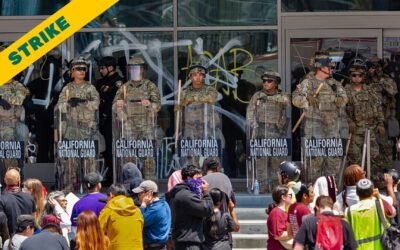
With its aggressive use of the military at home and abroad, the Trump administration appears to be on the offensive. But its aggressions are less an expression of growing power than an attempt to distract from the growth of opposition, the loss of public support, and the splits within its own ranks. The movement-based opposition, represented by the mass nonviolent resistance to ICE in Los Angeles and the five million participants in No Kings Day, is no longer a marginal actor but is now MAGA’s most powerful opponent. How can it utilize that power?

Latest Newsletter
Read and subscribe to our monthly newsletter and support our work.

ICE Assaulting Workers and Trade Unionists in Los Angeles
On June 6, 2025, during an ICE raid, David Huerta, President of the Service Employees International Union-United Service Workers West, was injured, arrested, and charged with felony conspiracy to impede an officer. He was released from custody June 9 in the face of...
Unions and Millions of Participants Join “No Kings Day”
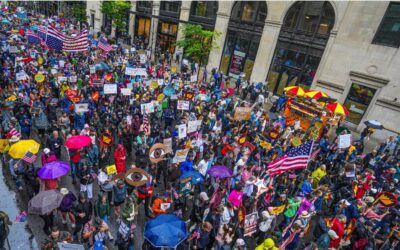
On June 14, No Kings Day actions were held in more than 2000 locations – reputed to be the most widespread one-day protests in US history. A variety of estimates indicate five million participants nationwide, including 100,000 in Philadelphia and 75,000 in Chicago. Pentland, Michigan, population 800, had 400 participants.

Coming Action Attractions!
On July 17th, the fifth anniversary of the passing of civil rights leader and US Representative John Lewis, rallies, community events, press conferences, and candlelight vigils will be held around the country to demand an end to…
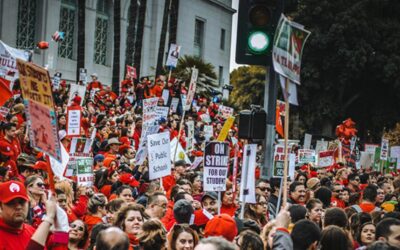
LA Teachers Win Green Healthy Schools and Climate Education
The United Teachers of Los Angeles recently won pioneering climate demands in their contract with the Los Angeles United School District.
Young Worker Training
In early June, LNS participated in the Labor Research and Action Network (LRAN) conference at Rutgers University in New Jersey.
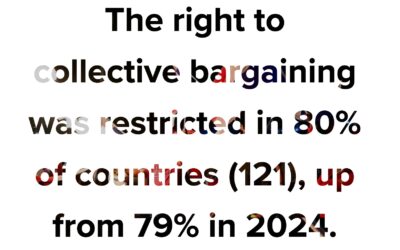
Worker Rights in Freefall Worldwide
A detailed review of worker rights around the world found that worker rights are in “freefall” across every continent.

In Case You Haven’t Heard…
Four billion people, about half the world’s population, experienced at least one extra month of extreme heat due to human-caused climate change from May 2024 to May 2025, scientists say.
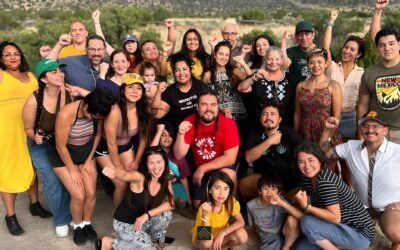
Workers Fight for State Heat Rules
Republicans in Congress are taking aim at efforts to protect workers from extreme heat. The target is a rule proposed by the Biden administration.
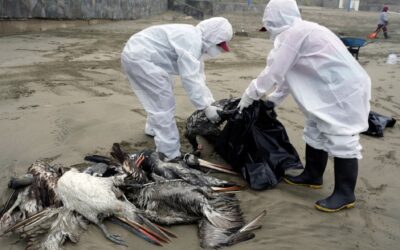
Bird Flu Threatens Workers
Since April of 2024, the U.S. has documented an unprecedented 70 known cases of H5N1, or “bird flu,” among dairy and poultry farmworkers.
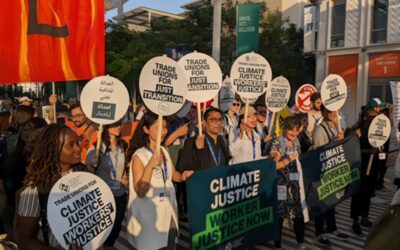
British Unions Holding “Year of Climate Action”
In 2024, Britain’s Trade Union Congress voted to back a Year of Trade Union Climate Action, engaging with community and climate justice groups. Major unions are promoting participation by their members and affiliates.

Defending Society Against the MAGA Assault
Wondering what the emerging movement against MAGA and Trump and for democracy and justice can do next? In a recent series of Commentaries, LNS Co-Founder and Senior Strategic Advisor Jeremy Brecher describes the rise of the movement to defend society against the MAGA juggernaut and proposes next steps.

The Movement-Based Opposition in Action
The previous Strike! Commentary described how the burgeoning movement to defend society against Trump’s tyranny is developing into a movement-based opposition. This commentary examines how the actions of that opposition can expand to defeat the MAGA juggernaut.